
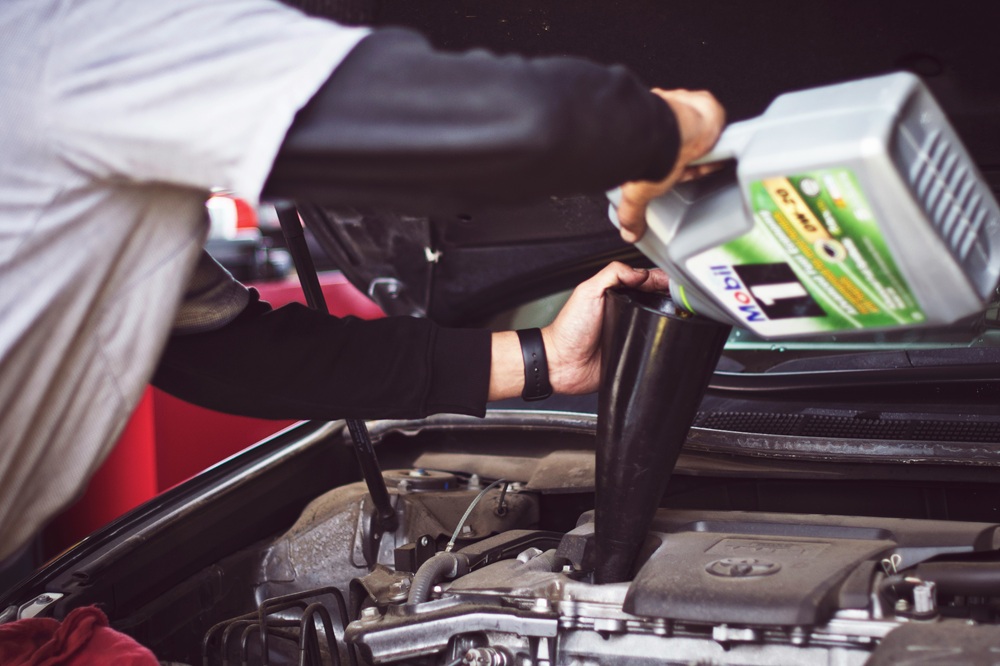
Five different people will give you five different oil change intervals. One swears by 3,000 miles because that’s what their dad always said. Another points to the dashboard reminder that says 7,500. A third hasn’t thought about it since the last inspection sticker went on. None of them are exactly wrong — it depends on the car, the oil in it, and honestly, how you drive around here.
Where 3,000 Miles Came From
That number is older than most of the cars on the road today. Back when engine oils and engines themselves were cruder, conventional oil broke down fast enough that changing it every 3,000 miles actually mattered. Manufacturers have pushed that interval out considerably since then, and for good reason — the oil itself got better.
What We Actually Tell People
3,000 to 5,000 miles, for most vehicles. That’s the range we work with at Jon Miller Car Care, and it splits the difference between the old rule and the longer intervals some manufacturers advertise. Where you land in that range depends on a few things: what type of oil is in the engine, how old the car is, and what your driving actually looks like day to day. Mostly highway miles up Route 9? Lean toward 5,000. Short hops around town, or idling in beach traffic all summer? Stay closer to 3,000.
Short Trips Are Worse Than People Think
This one surprises people. A car doing five-minute drives to the store actually wears out its oil faster than one doing an hour on the highway. The engine never gets hot enough, long enough, to burn off the moisture and fuel residue that build up in the oil during a cold start. If most of your driving in Tuckerton or Little Egg Harbor is quick errands rather than a real commute, don’t stretch toward 5,000 — your oil is working harder than the mileage suggests.
What Happens If You Just… Don’t
Old oil stops lubricating properly, and metal parts start grinding against each other instead of gliding. Give it long enough and sludge builds up inside the engine — the kind that’s genuinely expensive to clean out, if it can be cleaned out at all. Fuel economy drops too, since the engine is fighting extra friction it shouldn’t have to. Worst case, and this does happen, an engine run too long on degraded oil can seize completely. What would’ve been a $60 oil change turns into a replacement engine.
What’s Actually Included
An oil change here isn’t just drain-and-refill. We check the oil filter, the air filter, tire pressure, and take a look at the engine while the car’s already up on the lift anyway. It’s a natural moment to catch a cracking belt or a fluid that’s running low before either one turns into its own repair bill. And if you’re due for other preventative maintenance — a tune-up, a seasonal check — we’ll mention it right then instead of making you come back a second time.
The Simple Version
The sticker on your windshield after every visit already does the math, so you don’t have to remember mileage. If you’d rather have a rule of thumb: synthetic oil toward 5,000 miles, conventional closer to 3,000, and either one sooner if your driving is mostly short trips or crawling through summer shore traffic. Not sure where your car falls? Just call. It costs nothing to ask.
Frequently Asked Questions
Is it bad to go over 5,000 miles between oil changes?
Not immediately, if you’re running full synthetic. A few hundred miles over won’t hurt much. Push it a lot further, especially with conventional oil, and you’re gambling with sludge buildup and reduced protection for no real reason.
Do electric or hybrid vehicles still need oil changes?
Full EVs don’t — no combustion engine, no oil to change. Hybrids are a different story, since there’s still a gas engine under there. It follows a schedule similar to a standard car, though the exact interval depends on the model.
How do I know if my car needs synthetic or conventional oil?
Check the owner’s manual first — a lot of newer engines are built for synthetic from the factory. If you’re not sure what’s currently in your car, that’s an easy thing for us to check next time you’re in.
Does short-trip driving around Tuckerton really matter that much?
It does. The engine needs sustained heat to burn off moisture and fuel residue in the oil, and a five-minute drive doesn’t get there. Mostly local errands means mostly 3,000-mile intervals, not 5,000.